Thursday, October 13, 2022

BXRP: Armor Class & Thief Class

Armor Class

Armor

AC

Cost (gp)

Weight (Coins)

Leather

60%

20

200

Chainmail

70%

40

400

Plate mail

80%

60

500

Shield

5%

10

100


Thief 

Requirements: None

Prime requisite: DEX

Hit Dice: 1d4

Maximum level: 14

Armour: Leather, no shields

Weapons: Any

Languages: Alignment, Common


Thieves are adventurers who live by their skills of deception and stealth. Their range of unique skills makes them very handy companions in adventures. However, thieves are not always to be trusted.


Back-Stab

When attacking an unaware opponent from behind, a thief receives a +20% bonus to hit and doubles any damage dealt.


Combat

Because of their need for stealth and free movement, thieves cannot wear armor heavier than leather and cannot use shields. They can use any weapon.


Read Languages

A thief of 4th level or higher can read non-magical text in any language (including dead languages and basic codes) with 80% probability. If the roll does not succeed, the thief may not try to read that particular text again until they reach a higher level of experience.


Scroll Use

A thief of 10th level or higher can cast arcane spells from scrolls. There is a 10% chance of error: the spell does not function as expected and creates an unusual or deleterious effect.


Thief Skills

Thieves can use the following skills, with the chance of success shown opposite:

  • Climb sheer surfaces (CS): A roll is required for each 100’ to be climbed. If the roll fails, the thief falls at the halfway point, suffering falling damage.
  • Find or remove treasure traps (TR): A roll is required to find a treasure trap and then another to remove it. This may be attempted only once per trap.
  • Hear noise (HN): In a quiet environment (e.g. not in combat), a thief may attempt to listen at a door or to hear the sounds of something (e.g. a wandering monster) approaching.
  • Hide in shadows (HS): Requires the thief to be motionless—attacking or moving while hiding is not possible.
  • Move silently (MS): A thief may attempt to sneak past enemies unnoticed.
  • Open locks (OL): Requires thieves’ tools. A thief can only try this skill once per lock. If the roll fails, the thief may not try the same lock again before gaining an experience level.
  • Pick pockets (PP): If the victim is above 5th level, the thief’s roll is penalized by 5% for every level above 5th. A roll of 100% is always a failure. A roll of less than half the percentage required for success means that the attempted theft is noticed. The referee should determine the reaction of the victim.


Thief Skills Chance of Success


Level

CS

TR

HN

HS

MS

OL

PP

1

87

10

35

10

20

15

20

2

88

15

35

15

25

20

25

3

89

20

50

20

30

25

30

4

90

25

50

25

35

30

35

5

91

30

50

30

40

35

40

6

92

40

50

36

45

45

45

7

93

50

70

45

55

55

55

8

94

60

70

55

65

65

65

9

95

70

70

65

75

75

75

10

96

80

70

75

85

85

85

11

97

90

85

85

95

95

95

12

98

95

85

90

96

96

105

13

99

97

85

95

98

97

115

14

99

99

85

99

99

99

125


All skills are rolled on d%, with a result of less than or equal to the listed percentage indicating success. Thief Skills allow for extraordinary feats such as climbing a sheer surface instead of merely climbing or hiding within a shadow instead of ducking into an alley. If the action is something that any creature could try then the Thief gets to roll the appropriate Skill first and then may try the general test if their first roll was a failure.


Player Knowledge

The referee should roll for hide in shadows and move silently on the player’s behalf, as the thief always believes the attempt to be successful. If the roll fails, the referee knows that the thief has been noticed and should determine enemies’ actions appropriately.


After Reaching 9th Level

A thief can establish a thief den, attracting 2d6 apprentices of 1st level. These thieves will serve the character with some reliability; however, should any be arrested or killed, the PC will not be able to attract apprentices to replace them. A successful thief might use these followers to start a Thieves’ Guild.


Saving Throws

Level

XP

HD

CTH

D

W

P

B

S

1

0

1d4

55%

40%

35%

40%

25%

30%

2

1,200

2d4

55%

40%

35%

40%

25%

30%

3

2,400

3d4

55%

40%

35%

40%

25%

30%

4

4,800

4d4

55%

40%

35%

40%

25%

30%

5

9,600

5d4

65%

45%

40%

50%

35%

40%

6

20,000

6d4

65%

45%

40%

50%

35%

40%

7

40,000

7d4

65%

45%

40%

50%

35%

40%

8

80,000

8d4

65%

45%

40%

50%

35%

40%

9

160,000

9d4

80%

55%

50%

60%

45%

55%

10

280,000

9d4+2*

80%

55%

50%

60%

45%

55%

11

400,000

9d4+4*

80%

55%

50%

60%

45%

55%

12

520,000

9d4+6*

80%

55%

50%

60%

45%

55%

13

640,000

9d4+8*

90%

65%

60%

70%

55%

65%

14

760,000

9d4+10*

90%

65%

60%

70%

55%

65%

  • Modifiers from CON no longer apply.

CTH: Chance to hit, STR Modifier applies to Melee attacks and DEX Modifier applies to Ranged attacks.

D: Death / poison; W: Wands; P: Paralysis / petrify; B: Breath attacks; S: Spells / rods / staves.


Sunday, October 9, 2022

BXRP: A Fighter and an Orc

As part of my job running a comic and game store I teach a lot of people how to play Dungeons and Dragons and I've been contemplating this alteration to B/X DnD, Basic Fantasy, and Old School Essentials for some time. It simply changes the core mechanic from a d20 to a d100 roll low system. Its not mind blowing and I'm sure there will be people who might as "what is the point?"

The point is trying to demystify our hobby even further and overcome the "fear of math" that I encounter quite a bit in new players of all ages. Percentiles, obviously, are really easy to understand and explain and I just want to expand my toolbox for helping people find a hobby they love.

When a contested roll occurs, such as combat, the attack succeeds if their roll is equal to or less than Attack percentage and any doubles that are less than that score a critical successes, while any doubles greater than that score are critical failures. When attacked a creature rolls its Armor Class percentage and the attack misses if they succeed on their roll and in case of both attack and defender succeeding the winner is the highest successful roll unless critical are involved.

Constance Attacks the Orc Raider and she rolls a 32 while his AC roll is a 45, since his roll succeeds with the higher roll Constance misses the Raider.

Constance and the Or Raider are presented below.


Constance the Red

Strength 16 [80%] (+10%/+2)

Intelligence 13 [65%]

Wisdom 17 [85%] (+10%)

Dexterity 8 [40%] (-5%)

Constitution 15 [75%] (+5%/+1)

Charisma 10 [50%]


Hit Points 9

Melee Attack 65%

Ranged Attack 50%

Armour Class 70% (Chainmail)

Weapons Sword 1d8+2

Gear Backpack

Gold 75gp


Background Skill Baker

Appearance Malodorous, Snobbish

Personality Curious, Foolhardy

Misfortune Pursued

Languages Chaotic, Common


Death 45%

Wands 40%

Paralysis 35%

Breath 30%

Spells 30%


Orc Raider

AC 65%, HD 1 (4hp), Att 1 × weapon (1d6 or by weapon), Attack 55%, MV 120’ (40’), SV D12 W13 P14 B15 S16 (1), ML 6, AL Chaotic, XP 10, NA 1d8 (3d6), TT D 


Friday, October 7, 2022

Dark Sun: B'rohg for Old School Essentials, B/X D&D, & AD&D

 With Dark Places and Demogorgons on Kickstarter for Old School Essentials I decided to kick OSE's tires a bit. I'm in a John Carter kind of mood which brought me to the Burnt World of Athas, better known as Dark Sun. I've also been reading through 13th Age and really enjoy its monster design and dice tricks so I'm using that as additional design space.

If you hate or love it please let me know.


B'rohg for Old School Essentials

They are tall, slim, humanoid giants with four arms and two legs generally with an orange to brown skin tone due to the harsh sun of Athas. They stand 15' tall and have sharp, angular features and pointed ears often with numerous piercings. In the wild they are cautious raiders who often flee when they begin taking casualties. Those that are captured invariably end up gladiators in the many arenas of each City-State. 


AC 7 [12], HD 5+3 (26hp) Att 2 x spear (1d10), or 1 x boulder (2d6),THAC0 14 [+5], MV 120' (40’),SV D10 W11 P10 B13 S13, ML 10, AL Neutral, XP 300, NA 1d6 (2d6), TT Q


▶Block: If the b’rohg’s melee attack roll is a natural 17-20 they gain a -1 [+1] to their AC until the start of their next turn. This benefit may stack.


▶Boulder throwing: Up to 60’.


▶Four-Arms: If the b’rohg’s melee attack roll is a natural Even roll it inflict an additional 1d10 damage.


▶Psionic Talent: Roll 1d12: 

1) Cast hypnotism 1 x day

2) Cast shield 1 x day

3) Cast detect magic 1 x day

4) Cast cure light wounds 1 x day

5) Cast speak with animals 1 x day

6) Cast predict weather 1 x day

7) Cast invisibility to animals 1 x day

8) Cast detect danger 1 x day

9) Cast spook 1 x day

10) Cast auditory illusion 1 x day

11) Cast ventriloquism 1 x day

12) Cast charm person 1 x day

Thursday, October 6, 2022

Jarlsburg: Ember Drake for Old School Essentials


Ember Drake for Old School Essentials

Ember drakes are rewarded to especially devoted mortal worshippers of Tiamat. The Dragon Queen has found incredible success with the machinations of her zealots that are not dragons and while most of her dragon followers are disgusted at the mere thought of working with the lesser races, she is well aware that over the last millennia subtlety can be as devastating as a one of her children rampaging through a mortal city. Ember drakes are generally reserved for cults that are establishing a foothold within an area and are best used terrorizing the locals and quite often allow high ranking members of a cell to gain or increase their personal power in their territory. They are fairly cunning and always ready for a hunt. They are given to a priest while still an egg and bond with the first humanoid they see.

AC 5 [14], HD 4 (18hp), Att 1 × bite (2d4), THAC0 16 [+3], MV 120' (40'), SV D11 W13 P14 B13 S15,
ML 9, AL Lawful, XP 100, NA 1 (1), TT T

▶ Emberspark: When the ember drake rolls a natural 19-20 on their attack roll it emits a gout of flame that catches the target on fire and inflicts an additional 1d6 damage each turn until they or an ally pass a Dexterity check to put the fire out.

▶ Fireborn: Ember drakes are immune to damage from fire.

▶ Master of Flame: An ember drake's master has a bond with the creature that grants them resistance to fire (1/2 damage).

▶ Tail Lash: When a creature makes a melee attack against the ember drake and rolls a natural 1 they take 1d4 damage.


Ember Drake 
Evil Large beast
Initiative +2
AC 14
HP 115
Str 18 (+4)     Dex 12 (+2)    Con 14 (+2)   Int 7 (-2)
Wis 14 (+2)     Cha 6 (-2)
Space/Reach 10 feet/5 feet
Speed 60 feet
Melee Attack claws +6/+6 (1d6+4 slashing/
1dt+4 slashing) and bite +6 (1d8 +4 piercing)
Special Traits tailslap; vulnerable to poison damage
XP 450

    Tailslap three per day an ember drake can take an extra attack with it's tail.  If it hits with it's tailslap, the target takes 2d6+4 bludgeoning damage and is knocked back 10 feet.
    Vulnerability ember drakes have poison damage doubled against them.
    Combat:  Ember drakes are smart and vicious.  They will stalk and ambush their prey with great patience.  They prefer to tear at their target with claws and finish them off with their bite.  It's not uncommon for them to surprise a secondary victim with a quick snap of their long tail.   
     Habitat and Socity:  Ember drakes are created through a magical ritual generally practiced by Cults of Nilat the Corrupter.  The process requires a duck egg and nearly 2 years of foul ceremonies.  Ember drakes can be trained, though they are very willful.  They are far smarter, than most would anticipate and are easy to underestimate.
    Legend and Lore:  Their tails are useful for rituals and material components.  Their hearts are a delicacy and fairly valuable.  Less know is that their rear left paw is necessary for a specific darkness producing ritual, Gloaming.  With much commitment, ember drakes can be trained, but will never be fully broken.  The sage, Korwin of Nuln listed ember drakes as the scouts for Nilat's worshipers.


DnD Next is copyright Wizards of the Coast.  This a fan work and not a challenge to their copyright in any way.

Tuesday, September 27, 2022

Deadlands: Spearfinger for Savage Worlds


"Spearfinger, or U'tlun'ta, is a female monster in Cherokee legend that lived along the eastern side of Tennessee and western part of North Carolina. "U'tlun'ta" translates from Cherokee to "the one with pointed spear”, which refers to the sharp finger on her right hand. Sometimes, she was called Nûñ'yunu'ï, which means "Stone-dress". This name is from her stone-like skin.

Her sharp finger is said to be her forefinger on her right hand. The sharp finger resembled a spear or obsidian knife, which she used to cut her victims. Her mouth was stained with blood from the livers she ate. Often she clutched her right hand tightly, because her hidden heart and only weak spot was in her right palm."

Wild Card

Attributes: Agility d8, Smarts d8, Spirit d10, 

                   Strength d10, Vigor d10


Skills: Athletics d8, Common Knowledge d8, 

           Fighting d10, Intimidation d10, 

           Notice d8, Persuasion d10,

           Stealth d8, Survival d8


Pace: 9; Parry: 9; Toughness: 10 (3)


Edges: Improved Block, Bruiser

Gear: -- 


Special Abilities:

• Claw: d10+d8

• Armor: 3 

• Fear (-1) 

• Shape Change (self, victim's loved one)

• Weakness: She clutches her heart in her 

                      right hand and called shots 

                      to that location deal double 

                      damage


Wednesday, September 21, 2022

Old Gods of Appalachia: The Thing Whose Name Sounds Like Horned Head, But Is Not for Savage Worlds


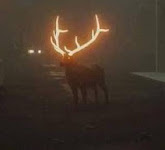
"Its coat was black as soot. Its hooves were wet with a viscous smearing brown. Its eyes burned with a foul blood-colored light. But the things she could not look away from were its antlers. They were amber. Translucent and honey-colored, pulsing with a low poisonous smolder, bits of ash falling from them here and there."

-- Old Gods of Appalachia Episode 0.5: The Witch Queen


The Thing Whose Name Sounds Like Horned Head, But Is Not  

Wild Card

Attributes: Agility d10, Smarts d12, Spirit d10, 

                   Strength d12+4, Vigor d12+4


Skills: Athletics d10, Common Knowledge d12, 

           Faith d10, Fighting d10, Intimidation d12, 

           Notice d10, Occult d10, Persuasion d10, 

           Research d12, Stealth d10, Survival d12,

           Taunt d12


Pace: 12; Parry: 9; Toughness: 16 (2)


Edges: Arcane Background (Miracles), 

            Calculating, Fleet of Foot, Followers, 

            Free Runner, Harder to Kill,  

            Master, Quick, Unholy Warrior

Gear: -- 


Special Abilities:

• Antlers: d12+d12+4

• Armor: 2 

• Fear (-3) 

• Low-Light Vision

• Size +4 (+1 Wound)


Powers: Boost/Lower Attribute, Confusion, 

               Deflection, Dispel, Elemental 

               Manipulation, Illusion, Light/Darkness, 

               Protection, Smite, Wall Walker, 

               Warrior's Gift

               Power Points: 35   


Thursday, August 18, 2022

One Dungeons & Dragons


Wizards of the Coast released the first playtest of One Dungeons and Dragon today. Going forward DnD won't have "editions" because WotC feels the current rules are pretty good and just need some reorganization and some new approaches.

After reading the playtest I agree with them.

Origins are packages made up of a Race, a Background, and a Language. The big changes are that Raced don't affect Ability scores, Background, however, do grant a +2 to Ability score and +1 to another and a Feat, and well, Languages...there is only so much you can do with them.

I love this approach. Background should have a bigger impact on your Ability scores and this just lets you choose whatever Race you like and gains its benefits. 

Oh, and Draw finally don't have Sunlight Sensitivity. Finally.

Other changes are Feats will now have certain levels as Prerequisites to simulate Class Abilities that are not tied to a Class, only Players can score a Critical Hit on a Natural 20 and only with weapons and unarmed attacks (I actually like this, it gives a small but important benefit to those that don't employ magic), and spells are now grouped by Primal, Arcane, and Divine categories with certain Classes granting specific spells from other lists.

They are developing a Virtual Table Top too but I'm lucky that I don't need that right now.

I'm not going to lie about the fact I didn't think WotC would retain me as a customer for DnD. Some the newer settings just aren't for me and I felt like the goals they had at the beginning of 5E were long gone (and rightly so, they have millions of new players). But this shows me they are listening and that is all I can ask.

I'm looking forward to what comes next because a successful DnD means a successful RPG industry.

Dark Conspiracy: Intruder Dark Minion

  I've been a fan of Dark Conspiracy since it was first published by Game Designer's Workshop and I went all in on Mongoose's Ba...